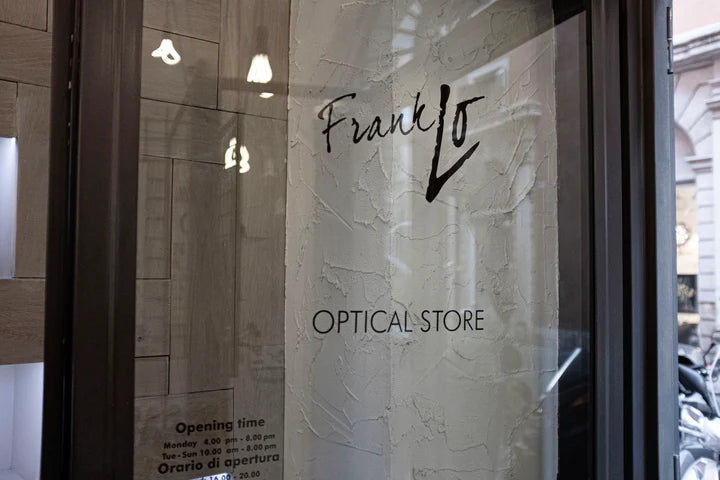
The difference between independent eyewear and an industrially produced frame cannot be reduced to a single detail. Price, country of manufacture or the number of available models do not, on their own, define the quality of a project.
A more useful comparison looks at who designs the frame, how it is constructed, which materials are used, how recognisable its design language is and what kind of service supports the purchase. These are the principles behind Frank Lo's independent eyewear selection.
What “independent eyewear” really means
An independent brand generally retains direct control over its creative identity and product decisions. This does not automatically mean that every step is manual, every frame is made in a tiny batch or every industrial product is inferior.
Independence mainly concerns the direction of the project: shapes, materials, collections and communication remain connected to a recognisable vision. Brands such as Masunaga, J.F. Rey, Eyevan, Rigards and François Pinton follow very different approaches. There is no single independent-eyewear style.
Industrial production does not mean poor quality
Industrial production can deliver large volumes, consistency, broad availability and repeatable processes. It can also use reliable materials and precise quality controls. Its limits appear when reducing commercial risk becomes the main design objective, leading to familiar shapes, very broad collections and rapid product replacement.
Independent eyewear may accept less conventional proportions, more complex finishes or limited production runs. Even then, each product should be assessed individually: “independent”, “artisanal” and “handmade” are not interchangeable terms.
Six differences worth examining
1. Design identity
A strong frame is not merely unusual. Shape, thickness, bridge, temples, hinges and colour should form a coherent whole. Independent labels often maintain this continuity across different collections.
2. Materials and finishes
Cellulose acetate, titanium, steel, natural horn and composite materials can be processed in very different ways. Mazzucchelli 1849, for example, describes cellulose acetate as a material traditionally used for optical frames and sunglasses. The result still depends on thickness, milling, polishing, assembly and quality control.
Frank Lo's eyewear materials guide compares these characteristics without treating one material as the answer to every need.
3. Scale and production runs
Large-scale production usually aims for continuous availability. Independent collections may involve smaller quantities, special colourways or longer restocking times. Limited availability is not proof of value by itself, but it may reflect specific manufacturing, material or distribution choices.
4. Fit and proportions
The most important difference is often felt when the frame is worn. Overall width, temple opening, bridge design, angle and weight distribution matter more than lens width alone. Two frames with similar measurements can therefore fit very differently.
Before ordering, use the guide to frame size, bridge and shape or compare the measurements with a frame that already feels comfortable.
5. Distribution and availability
Many independent labels choose selective distribution. This allows specialist stores to understand the collections more closely, but makes it important to check the exact colour, size and availability. The individual product page remains the most current reference.
6. Advice and after-sales support
When shapes and constructions are less standardised, specialist advice becomes more valuable. Its purpose is not to point to the “most important” frame, but to consider the face, intended use, lenses, comfort and character. Frank Lo offers eyewear consultation in Rome and, where possible, remote guidance.
How to look beyond marketing labels
Terms such as “artisanal”, “heritage”, “made in” and “limited edition” should be supported by concrete information. Before choosing, ask:
- does the brand clearly state materials and origin?
- are the construction details consistent with the price?
- are measurements and variants available?
- does the shape express a design idea or merely follow a trend?
- is advice available before and after the purchase?
A transparent description is more useful than a generic label. Frank Lo therefore presents brands, products and manufacturing traditions separately, without assigning the same origin or production method to every frame.
Which should you choose?
Someone looking for immediate availability, consistency and familiar styling may find a suitable answer in industrial production. Someone seeking a more personal design language, unusual materials or a closer relationship with the project may prefer independent eyewear.
The best choice depends on the relationship between the object, the wearer and its intended use. Start with the selection of optical glasses or explore the sunglasses selected by Frank Lo.
Frequently asked questions
Is independent eyewear always handmade?
No. An independent brand may combine manual work, specialist machinery and industrial processes. Check the information supplied for the individual manufacturer and model.
Is industrial eyewear necessarily lower quality?
No. Industrial production can provide precision and reliable materials. The differences often concern scale, design freedom, distribution and the distinctiveness of the design language.
Why do some independent frames cost more?
Price may reflect materials, complexity, production volume, origin, finishing and distribution. Price alone should not be treated as proof of quality.
How can I tell whether a frame will fit?
Compare overall width, bridge and temple length with a frame that already fits comfortably. For unconventional designs, request guidance or try the frame in store.
Contact Frank Lo or visit the boutique at Via del Leone 8 in Rome to compare different materials, proportions and constructions in person.